PEARCE+ is a small, experimental studio with a practice that weaves together architecture, land art and collective making. Our practice is founded on four core propositions:

Architecture must be allied to the earth and connected to nature, not an imposition on it.

Making is an exploratory process for learning and betterment, not a task to be outsourced.

Collaboration is the foundation of enjoyment and advancement, not a box-ticking process.

Design is a behaviour and a commitment, not a body of knowledge

Consequently, our work is defined not by what we create but the way in which it is manifested and the shared principles that it embodies. Whether it is fabricating a restaurant in the Arctic, constructing a woodsman's shelter in the forest, sculpting an installation of memory looms to roam around Anglesey, or designing a communal hub for the rural homeless, our success comes from building a team, connecting with the challenge and working it out together.

We find joy and gratitude in being able to create installations, structures and environments that are both grounding and hopeful, that provide space for conversation, contemplation, and connection; places that allow you to play and reimagine, and to dream. 

Contact@pearce-plus.com

Owen Hughes Pearce is the founding director of PEARCE+, which he established in 2019. He is also a Senior Lecturer at Oxford Brookes University, focusing on sustainable architecture for an alternative future, community-led making, and design for remote contexts. His practice spans design, teaching, participation, and making, with a guiding principle that every project begins by assembling the right team.

At PEARCE+, Owen curates a collective of architects, makers, and engineers selected for each project’s unique needs, forging a close-knit and collaborative approach. The studio has gained a reputation for challenging convention—both in ideas and process—and for reimagining how we build and involve communities. Committed to a plurality of voices, PEARCE+ believes that good architecture demands a radical mindset, underpinned by the conviction that there is always more to learn.

Current collaborators: Onion Collective CIC, Invisible Studio, Lean Structures, RAW:Almond, Contains Art, Hastings Commons, Jericho Road, Root Connections, Public Map Project, Shahé Gregorian, Somerset Wildlife Trust, Black Horse Workshop

Playscape - Westonbirt

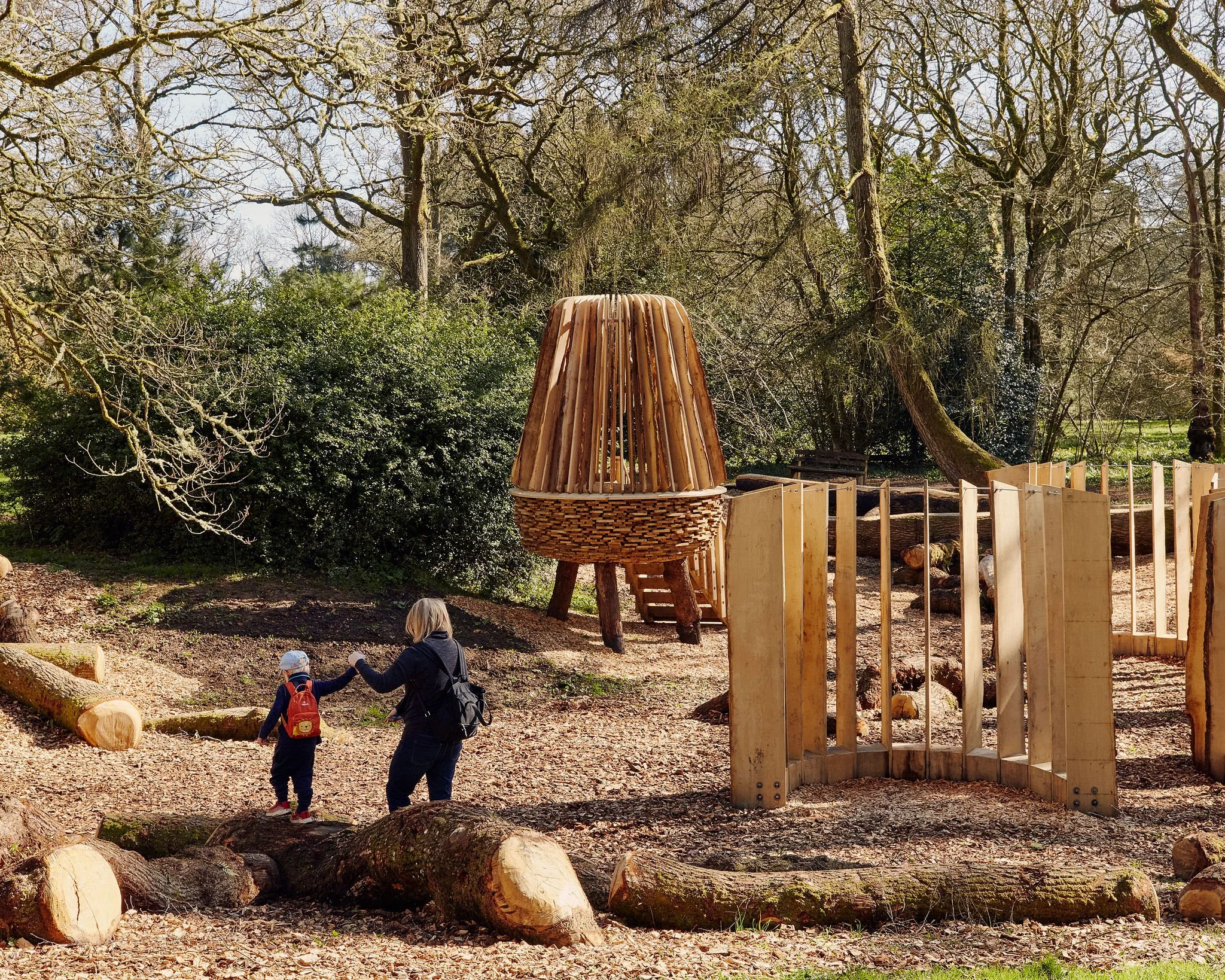
The playscape at the National Arboretum Westonbirt is a play landscape designed for all ages, encouraging open-ended exploration, movement, and imagination. Constructed from timber sourced directly from the arboretum, the project highlights the natural beauty of its materials, with exposed bark, knots, and irregular edges that enhance the connection between play and the surrounding landscape.

Featuring a series of hide-and-seek walls, lookout towers, and log scrambles set within a contoured terrain, the playscape offers opportunities for climbing, hiding, balancing, and observing. Instead of outlining a specific route or method of play, it invites visitors to create their own journeys, discovering thresholds, elevated viewpoints, and surprising moments along the way.

Deeply rooted in the character of Westonbirt, this project provides a tactile, adventurous, and socially engaging environment for both children and adults.

Client
Forestry England

Year
2026

Team

PEARCE+, Lean Structures, Shahé Gregorian

Photography
Joseph Horton

East Quay Pods

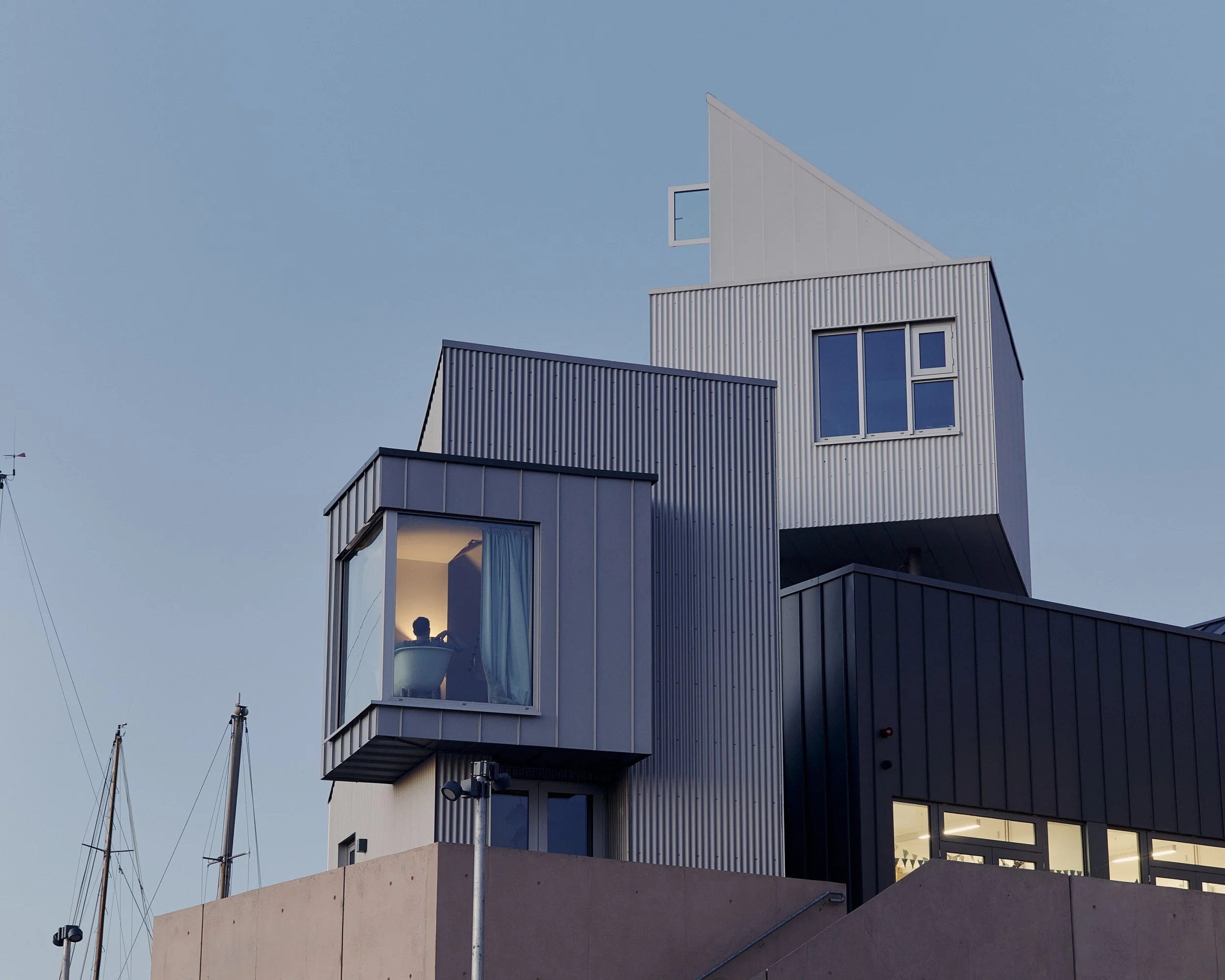
PEARCE+ designed and built five bespoke accommodation pods at East Quay in Watchet, Somerset, creating a series of extraordinary places to stay that sit at the heart of this new cultural destination. Developed for Onion Collective CIC, the pods form part of a wider arts, community and regeneration project on the town’s historic harbour edge.

Conceived as creative spaces for adventurous visitors, each pod has its own distinct identity, shaped by Watchet’s heritage, industry, folklore and future ambitions. Together, they offer an experience that is playful, immersive and deeply rooted in place. Some frame views across the harbour and Bristol Channel, while others celebrate storytelling, participation, accessibility, craft and reuse.

Two of the pods perch above the building on stilts, extending East Quay’s lively, characterful skyline. Across all five interiors, PEARCE+ brought a hands-on approach that combined architecture, making and storytelling. Much of the work was constructed directly by the studio, resulting in spaces that are inventive, highly crafted and rich with detail. Reclaimed and repurposed materials sit alongside bespoke furniture, built-in elements and artist-made interventions, giving each pod its own atmosphere and narrative.

The pods range from a ‘living museum’ of exchanged local objects, to an accessible family pod etched with illustrations of Watchet’s stories and myths, to spaces shaped by industrial references, playful structures and participatory art. Throughout, the project balances delight and practicality, creating memorable places to stay that reflect the social and cultural life of the town.

As part of East Quay, the pods contribute to a wider vision for culture-led regeneration in Watchet — offering not just accommodation, but a way for visitors to inhabit the creativity, history and collective imagination of the place.

Client
Onion Collective CIC

Year
2022

Team

Faegen, Lean Structures

Photography
Joseph Horton

RAW:Almond 25

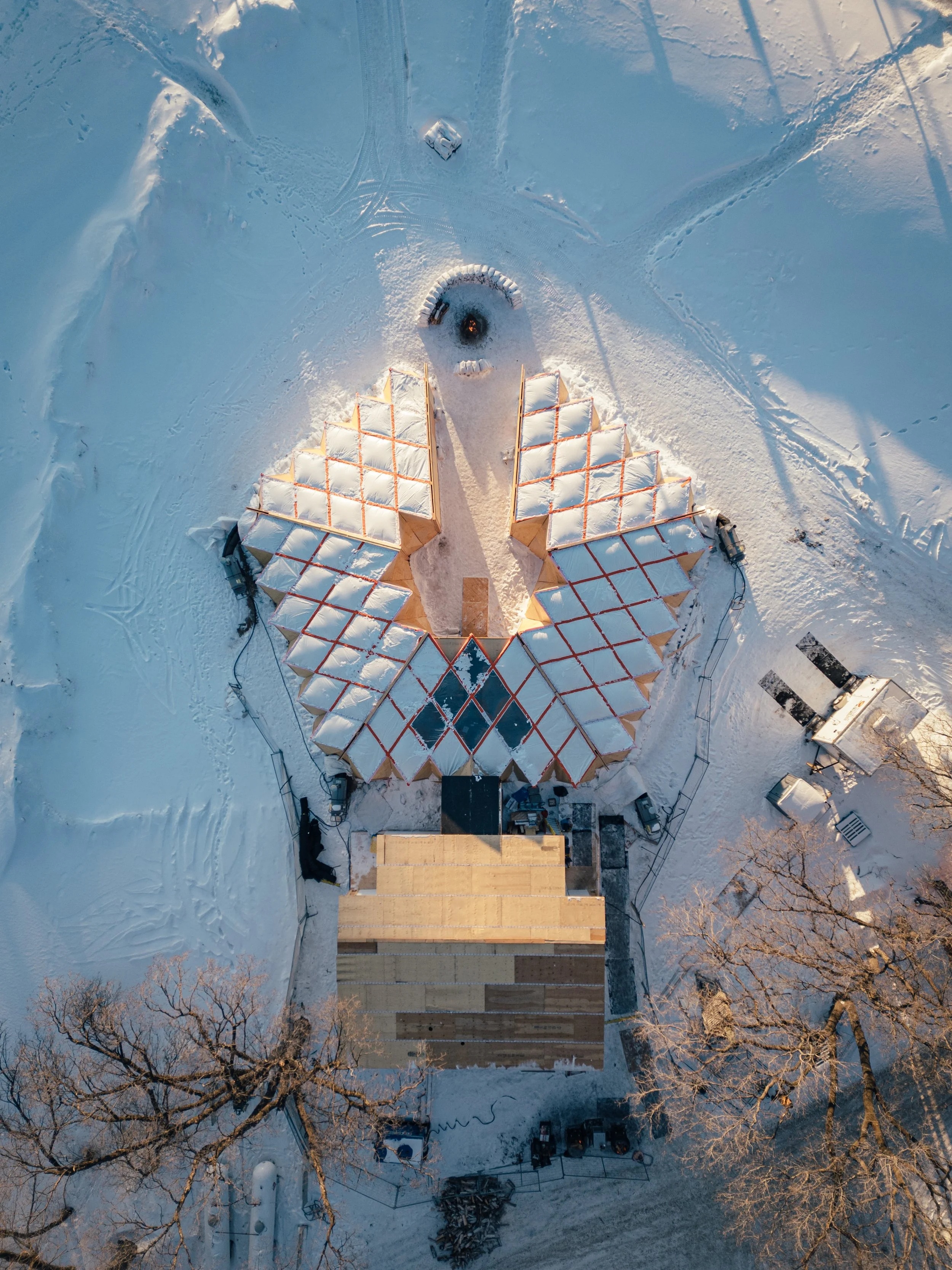
A pop-up restaurant built in 10 days in temperatures dropping as low as -47 degrees celsius with within chill in Winnipeg , Canada. The project reused materials from previous years and the gold inflatable panels designed in 2024.

Client
RAW:Almond

Year
2025

Team

Joe Kalturnyk, Wolfrom Engineering, Inflate

Photography
Drone photography by PJ Jordon

The Rural Roaming Room

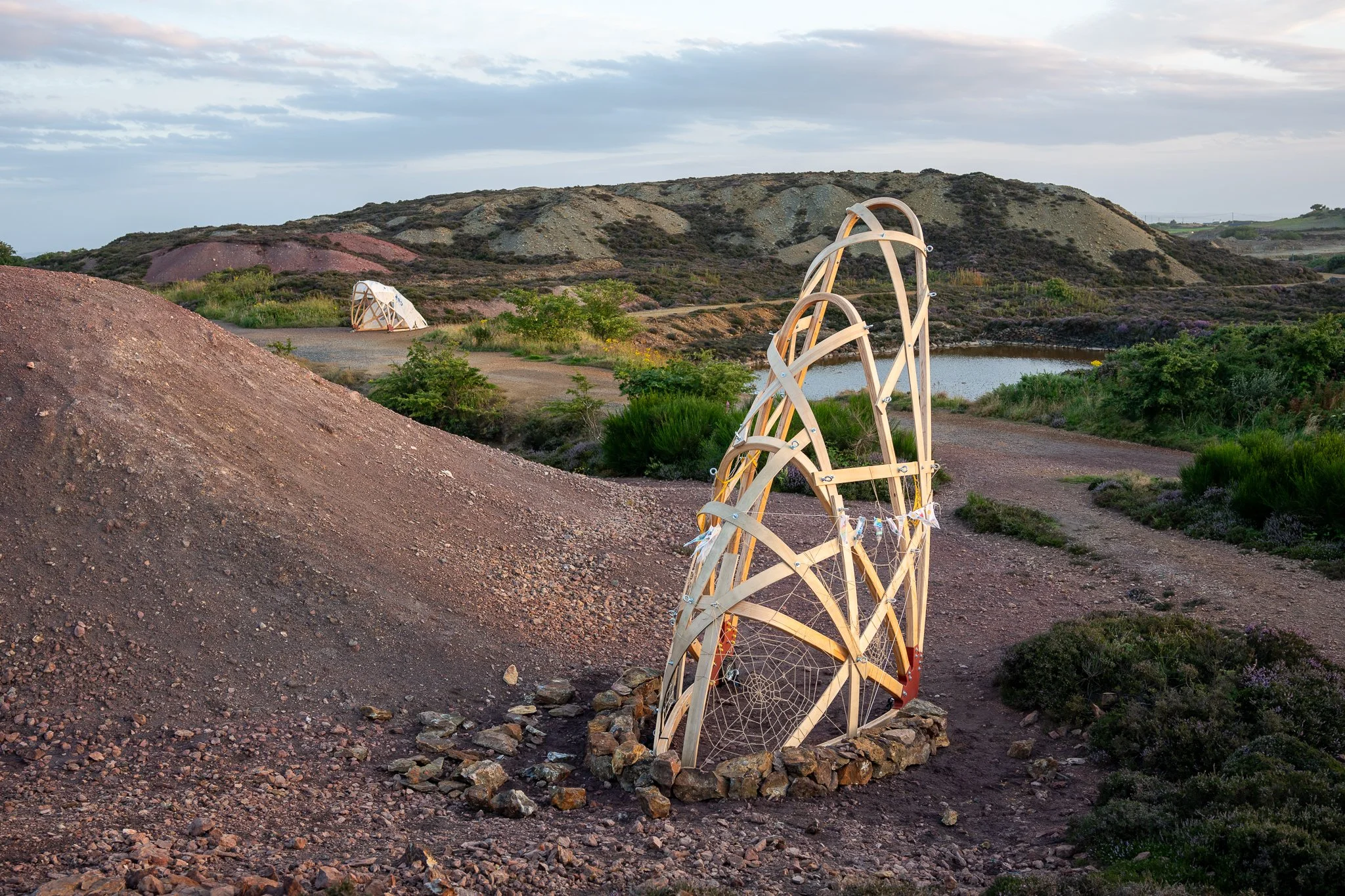
A mobile structure travelled across the island of Anglesey in Wales, towed behind our trusty Land Rover for Cambridge University’s Public Map project. Pearce+ built the structures using steam-bent, laminated ash dieback, and at each site, looms were woven to capture local memories.

Client
The Public Map, Cambridge University

Year
2024 - Ongoing

Team

Invisible Studio, Lean Structures and Shahe Gregorian.

Working with Cyfoeth Naturiol Cymru (Natural Resources Wales), we harvested marram grass from the receding dunes at Newborough Beach, Anglesey, supporting the care of this rare coastal ecosystem. The harvested material was then used to thatch Loom 5 alongside school groups and the wider public.

Dog Walkers Pavilion

The Dog Walkers’ Pavilion is a deployable shelter located in the courtyard of  East Quay, a contemporary arts and cultural centre in Watchet on the Bristol Channel designed by Invisible Studio. The pavilion serves a simple purpose: to provide a dry space for walkers and their dogs to rest for refreshments, as dogs are not permitted inside the kitchen.

The pavilion is specifically built to withstand exposed maritime weather. A robust combination of materials—steel, aluminium, and marine plywood—creates a durable, low-maintenance structure that can adapt between everyday use and special events. The layout incorporates three key elements: a fixed seating along the existing shipping container, a wheeled bench that can be rolled out to increase capacity, and a five-panel roof that opens and closes to adapt to changing weather conditions, offering shade, shelter, or an open courtyard as needed. The result is a small piece of infrastructure that enhances dwell time, comfort, and inclusivity, allowing the courtyard to function in a multiplicity of ways.

The interior surfaces, including the ceiling and seating niches, were co-painted as part of the Festival of Community Making, hosted by Onion Collective and Contains Art. Participants were invited to paint “what’s important to you in this place,” creating a layered panorama of people, memories, landscapes, and local wildlife. This initiative was later expanded through sessions with local youth groups and after-school clubs.

In addition to the pavilion, the project proposed a low-cost greening strategy for the artist studio containers in the courtyard. This plan includes a timber frame with training cables for climbing plants, recycled packing crates used as deep planters, and a simple access deck, providing a resilient alternative to sedum in extreme coastal conditions.

Client
Contains Art, Onion Collective, East Quay

Team
Lean Structures, Feng Engineers, Morrish Fabricators

Year
2025

Photography
Joseph Horton

"Recollection” Exhibition

Pearce+ designed modular cardboard display cases at East Quay, Watchet, incorporating seating and reading areas. The exhibition features works from writer and art historian Jeremy Cooper’s collection, including pieces by Gavin Turk, Tracey Emin, and Gilbert & George. Afterwards, the cases will be repurposed and recycled, challenging wasteful norms in art exhibitions.

Client
Contains Art

Year
2025

Team
George Harwood Smith: Curator, KarTent: display unit fabricator, East Quay

Funder
Arts Council England

Photography
Joseph Horton

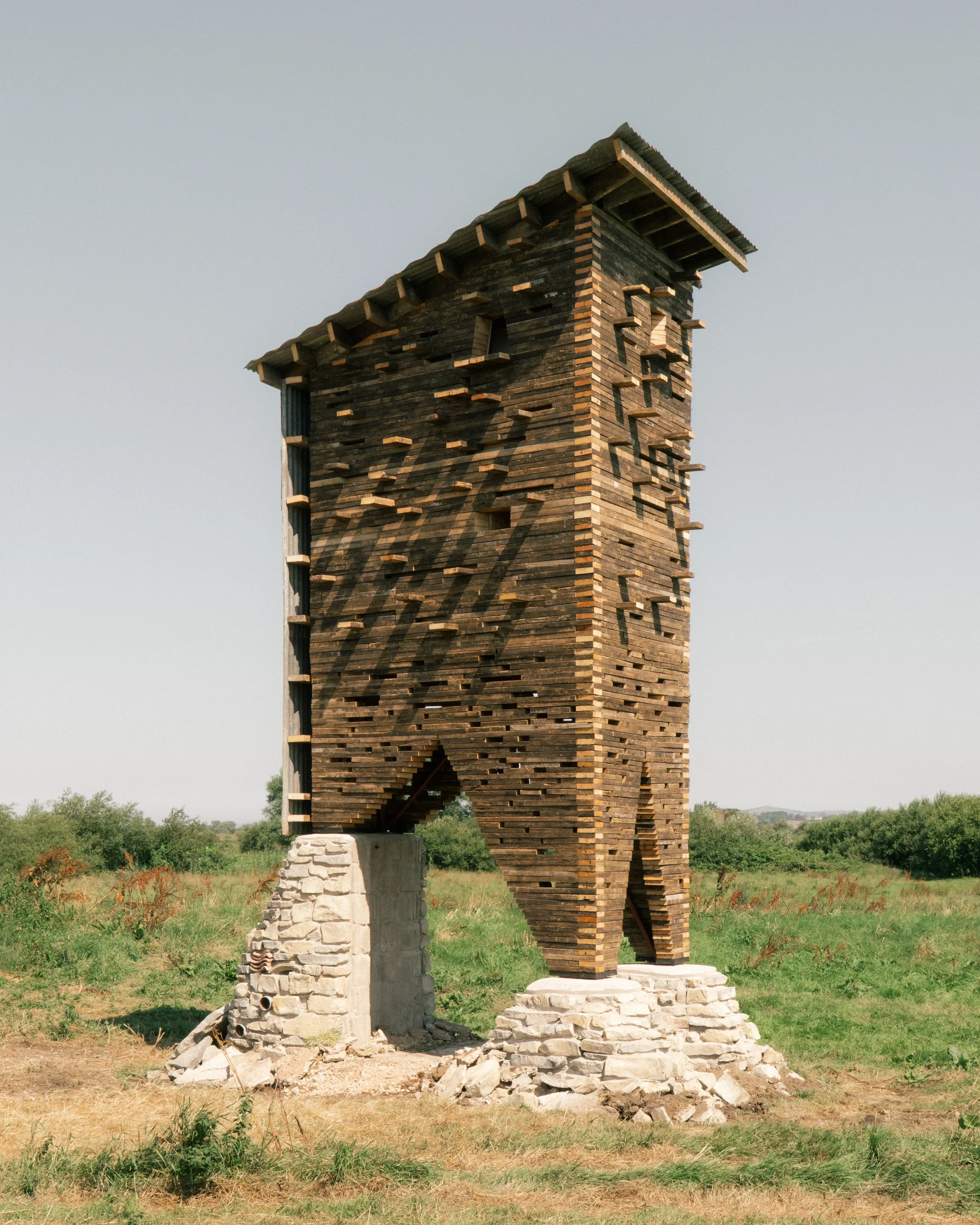
Wildlife Tower

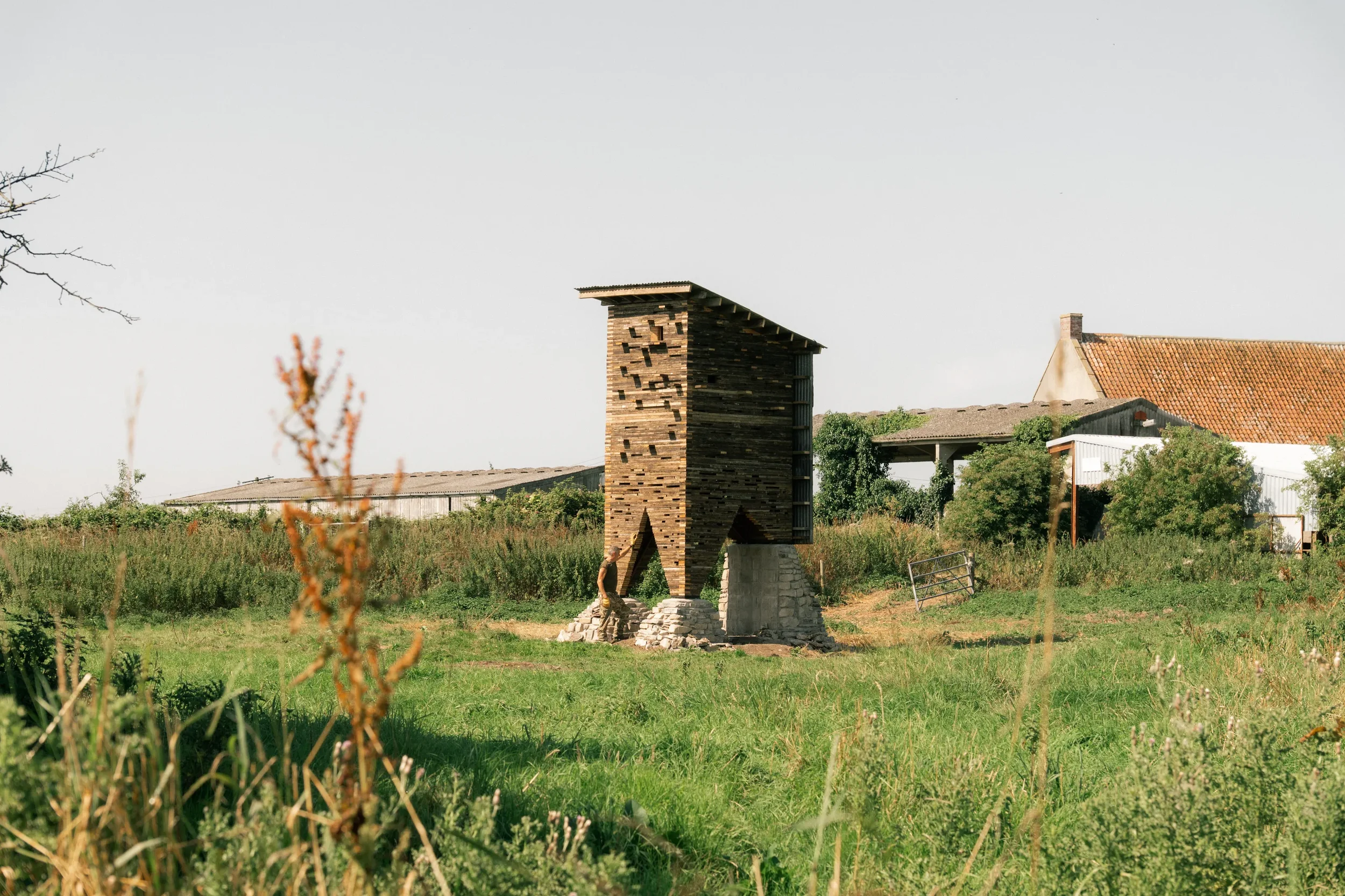
Working with the Somerset Wildlife Trust at their incredible peatland wildlife regeneration project, Honeygar Farm in the Avalon Marshes area of Somerset. PEARCE+ have been designing multispecies wildlife infrastructures suitable for bats, barn owls, little owls, kestrals, invertebrates and wetland creatures. The first tower uses relcaimed materials availble from at the retired diary farm: Larch, steel sheeting, paving stones and concrete rubble and cattle fencing.

Client
Somerset Wildlife Trust

Year
2024-2025

Team
Momentum Structural Engineers

Green Woodworking Shelter

The felled on-site green oak structure features a bespoke aluminium shingle roof.

Client
Westonbirt Arboretum: Forestry England

Year
2023

Team

Invisible Studio, Lean Structures and Shahe Gregorian.

Photography
Joseph Horton

Building a Martian House

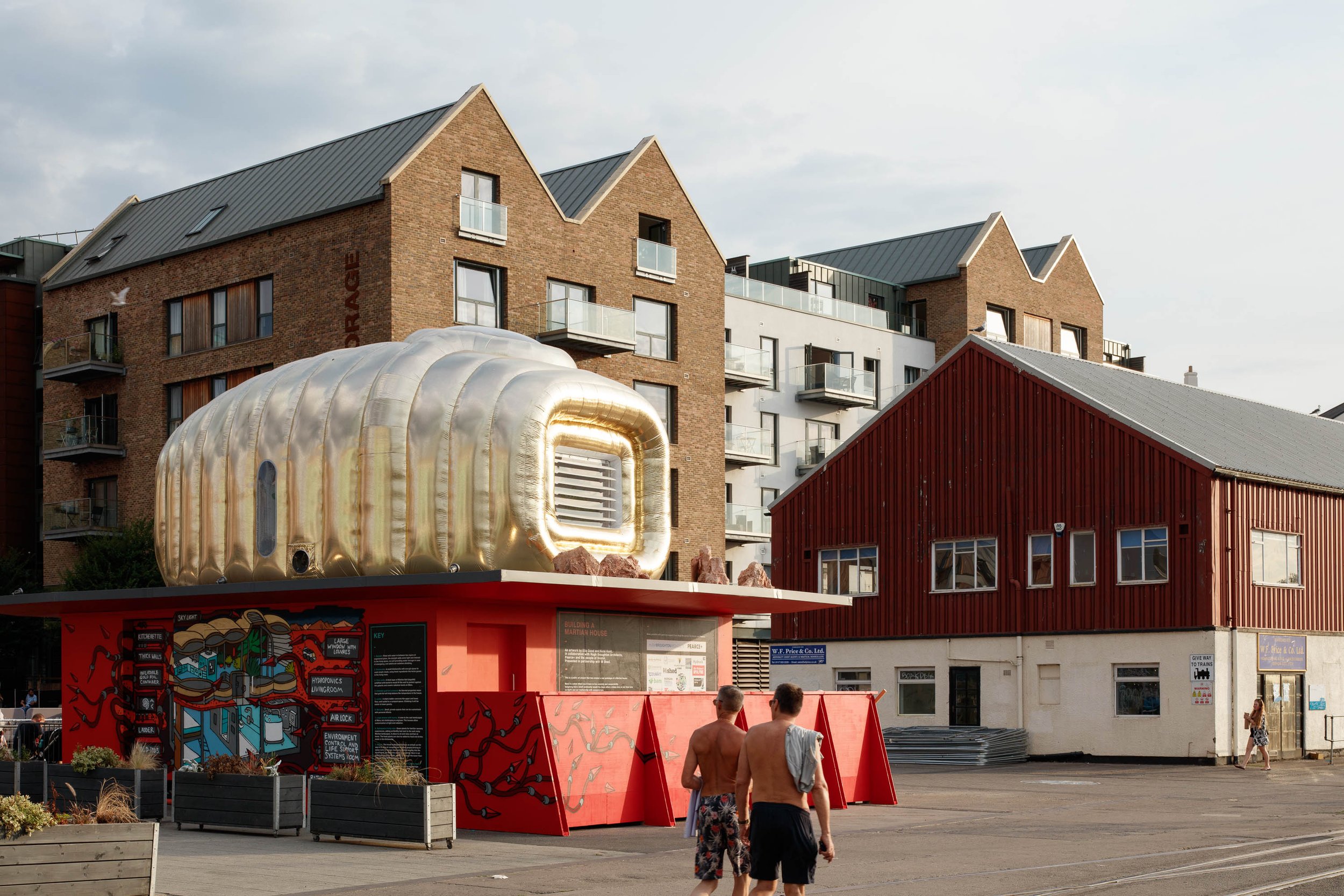
PEARCE+ collaborated on the design of Building a Martian House, a speculative full-scale prototype exploring how future life on Mars might reshape the way we think about living on Earth. Developed with Hugh Broughton Architects as part of artists Ella Good and Nicki Kent’s wider public art project, the house brought together architects, engineers, scientists, designers and the public to imagine new forms of domestic life shaped by resource scarcity, environmental extremes and collective invention.

Installed on M Shed Square in Bristol, the two-storey house was conceived as a prototype for life in a hostile off-world environment, while also acting as a public space for discussion, workshops and experimentation. The design responded to the environmental demands of Mars through a lightweight, solar-powered structure combining a pressurised inflatable upper level with a lower level imagined as being embedded within the planet’s lava tubes for protection from radiation. On Earth, the project became a lens through which to explore questions of sustainability, consumerism and how we might live with lower energy use, zero waste and greater care for resources.

The house was organised as a compact but immersive living environment. The upper level contained a hydroponic living room surrounded by plants, designed to support both wellbeing and food production, while the lower level housed life-support systems, sleeping pods and low-water sanitary spaces. Across the project, domestic life was reimagined through repairable, multi-functional and low-waste interiors, proposing an alternative vision of future living that was both technically inventive and socially engaged.

More than a building, Building a Martian House operated as an evolving public artwork and research platform — a place where architecture, science and participation could come together to test ideas about living well in extreme conditions. In doing so, it offered a speculative architecture for Mars, while opening up urgent conversations about sustainability, adaptability and everyday life on Earth.

Client
Ella Good & Nicki Kent

Year
2022

Team

Hugh Broughton Architects, Buro Happold, Hydrock, and the Bristol University Aerospace department,

Photography
Luke O'Donovan

RAW:Almond 24

A temporary dining experience in the harsh Canadian winter, featuring a grid shell structure made from loaned reinforcing bars with inflatable pillows to retain warmth when temperatures drop as low as -30 degrees Celsius

Client
RAW:Almond

Year
2024

Team

Joe Kalturnyk, Wolfrom Engineering, Inflate

Photographs
Simeon Rusnak

Anti-Classroom

A fidget friendly anti-classroom called the Creator Space at East Quay in Watchet. Designed through a series of workshops with local year 8 students.

Client
Onion Collective CIC

Year
2022

Photography
Joseph Horton

Other Select Work and Live Projects

In the Press

Tecture Mag: RAW:Almond 2025

Contact us.


RIBA South West Building of the Year - East Quay

National Pro Team Civic Trust Award, 2023 - Building a Martian House


Regional Pro Tem Civic Trust Award, 2026 - RAW:Almond